The Handfasting Ritual: Where "Tying the Knot" Began
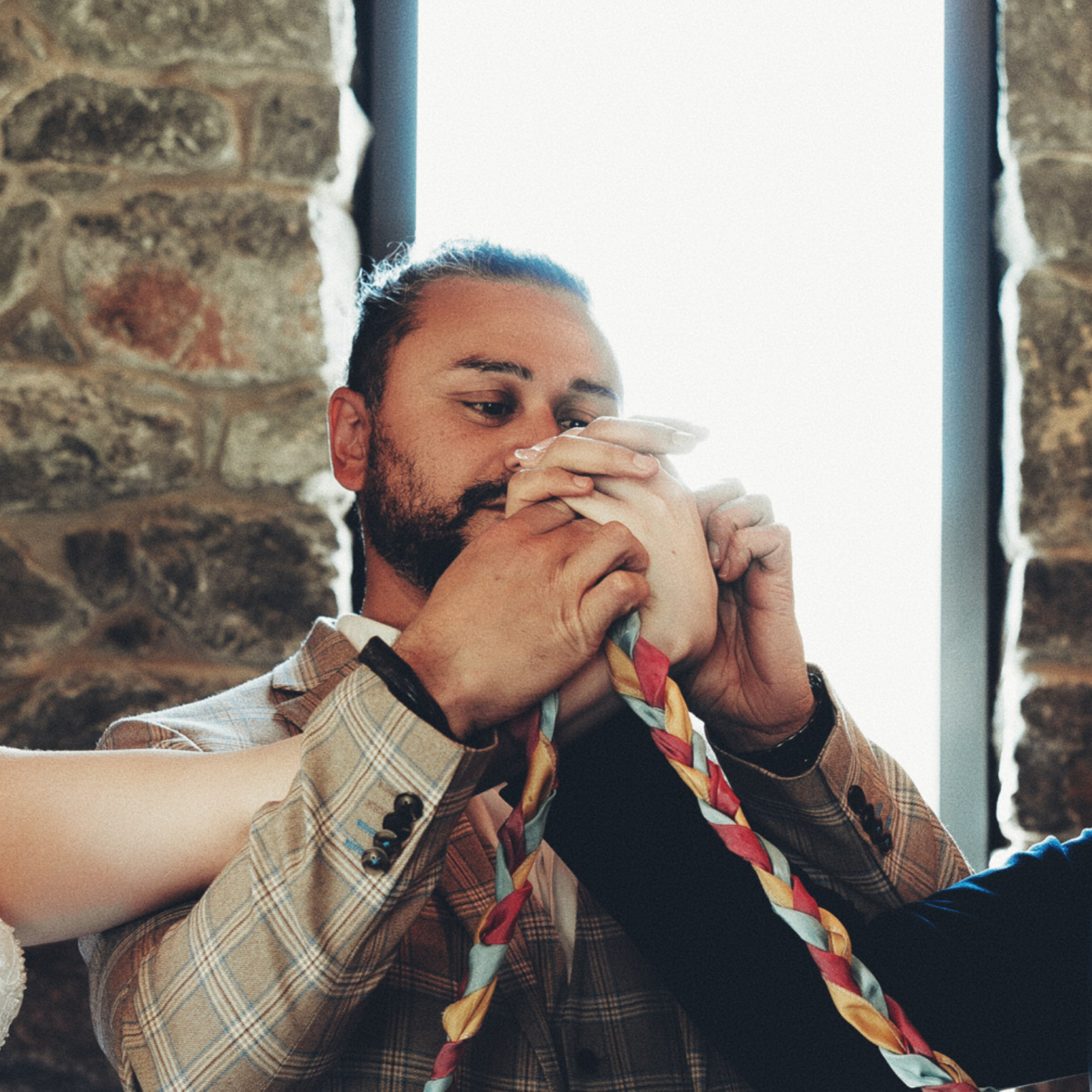
When someone says they're "tying the knot," they're echoing an ancient ceremony most people have never seen.

"The cords wait. The community gathers. The ritual begins."
Handfasting is where that phrase comes from. It's not a metaphor—it's a literal act. Two people stand together, hands joined, and a celebrant binds their wrists with ribbon or cord. The knot isn't symbolic. It's real. You can see it. You can feel it. And when it's done well, the moment shifts from words into something you can touch.
This isn't new-age invention. Handfasting predates Christianity by thousands of years. It appears in Celtic Ireland around 7000 BC, in Scottish Highlands weddings, in Druidic rituals, in Norse and Pagan ceremonies across Northern Europe. For millennia, it was how people marked commitment—before rings, before churches, before the state cared who you married.
In ancient Celtic culture, handfasting wasn't just a wedding. It was a betrothal—a public declaration of intent. Sometimes it lasted a year and a day, a trial marriage to see if the bond would hold. If it did, the couple would formalize it. If not, they could part without shame. The binding was temporary, but the intention was real.
As Christianity spread, handfasting didn't vanish. It absorbed. In Medieval Scotland and Ireland, handfasting became a recognized form of marriage, especially in rural areas where priests were scarce. Couples would handfast in front of witnesses, and the marriage was considered legal. The phrase "married by declaration" comes from this tradition—two people standing in front of their community, joining hands, and making a promise.
By the 18th century, handfasting began to fade as formal church and state marriages became dominant. But it didn't disappear. Pagan communities kept it alive. Neo-pagans and Wiccans in the 20th century revived it. And today, couples of all beliefs—religious, spiritual, secular—are bringing it back because it does something words alone can't do.

## What Makes Handfasting Powerful
There's something about a physical act that makes a promise land.
You can say "I commit to you" and people nod. But when someone wraps a cord around your hands while you're staring into your partner's eyes, and the celebrant says, "As these cords bind your hands, so too do your hearts and lives bind together," your nervous system registers it differently. You're not just hearing a vow—you're wearing it.
The ribbon or cord becomes a threshold. Before the binding, you're individuals. After, you're joined. Not metaphorically—literally. You can't move your hands independently anymore. You're tethered. And when the celebrant unties the knot and says, "Though these cords are now removed, the bond they represent remains," everyone in the room feels it.
This is ritual at its best. It doesn't explain itself. It enacts itself. The meaning is in the action.
## How Handfasting Works in a Modern Ceremony
Handfasting is endlessly adaptable. It can be the entire ceremony or one moment within it. It can be deeply spiritual or entirely secular. It can involve one ribbon or six. It can include family members, children, or just the couple and the celebrant.
Here's the basic structure:
1. The couple joins hands.
This can be one hand each (right hands clasped) or both hands (creating the infinity symbol, representing eternity). Some couples face each other; others stand side by side.
2. The celebrant wraps the cord(s) around their wrists.
This can be done in silence, with music, or while the celebrant speaks about the symbolism of the binding. Some celebrants invite guests to witness in silence. Others narrate the action: "As I bind your hands together, I bind your lives, your dreams, your futures."
3. The couple exchanges vows.
Many couples speak their promises while their hands are bound. This adds weight—you're not just saying words; you're saying them while physically joined. Some couples write personal vows for this moment. Others use traditional language. Some say nothing and let the binding speak for itself.
4. The knot is tied.
The celebrant ties the cord into a knot—sometimes loose, sometimes intricate. This is the moment of commitment. The phrase "tying the knot" happens here.
5. The cord is removed (or left on).
Traditionally, the celebrant unties the cord and explains that while the physical binding is released, the spiritual one remains. Some couples keep the cord tied and wear it for the rest of the ceremony (or the entire day). Others frame it afterward as a keepsake.

## The Symbolism of Cord Colors
Part of what makes handfasting personal is the choice of colors. Each color carries meaning, and couples often select ribbons that reflect their values, heritage, or intentions.
Here are some traditional meanings:
- Red: Passion, love, vitality, fire
- White: Purity, peace, devotion, new beginnings
- Blue (dark): Strength, loyalty, longevity
- Blue (light): Health, patience, tranquility
- Green: Fertility, prosperity, growth, nature
- Yellow: Harmony, joy, attraction, optimism
- Orange: Encouragement, kindness, abundance
- Purple: Spirituality, wisdom, deep connection
- Black: Wisdom, protection, grounding, strength
- Gold: Unity, wealth, longevity, celebration
- Silver: Clarity, reflection, balance
- Brown: Earth, stability, home, grounding
Couples often use multiple cords—one for each value they want to weave into their marriage. A red cord for passion. A green for growth. A gold for unity. Each ribbon adds a layer of intention.
Some couples invite family members to bring their own ribbons and meanings. A grandmother might offer a cord representing wisdom. A best friend might bring one for laughter. The celebrant weaves them all together, and the handfasting becomes a collective act—community binding the couple, not just the celebrant.
## When Handfasting Feels Right
Not every couple needs handfasting. But for some, it's exactly what they're looking for.
Handfasting resonates with couples who:
- Want something tactile and participatory. If you don't want a ceremony where you just stand and listen, handfasting gives you something to do.
- Have Celtic, Scottish, Irish, or Norse heritage. For many people, handfasting connects them to their ancestry in a visceral way.
- Are drawn to ritual and symbolism. If you care about meaning over aesthetics, handfasting delivers.
- Want guests to witness something visual. Handfasting gives everyone in the room a clear moment to focus on. You're not just hearing about commitment—you're watching it happen.
- Are blending traditions. Handfasting works beautifully alongside other rituals (unity candles, sand ceremonies, ring exchanges). It's collaborative, not exclusive.
- Want their ceremony to feel ancient and grounded. If you're looking for something that predates modern wedding conventions, handfasting is thousands of years old.
## Handfasting in Pagan and Spiritual Ceremonies
In Pagan, Wiccan, and Druidic weddings, handfasting is often more than a single moment. It's woven into a larger spiritual framework.
These ceremonies often begin by calling the Four Corners (Earth, Air, Fire, Water) to create sacred space. The celebrant might invoke deities, ancestors, or elemental energies. The handfasting itself becomes the central ritual—the moment when two people, surrounded by spiritual witnesses, bind their lives together.
Traditional Pagan handfastings may include:
- The Scottish Quaich Ceremony: A shared cup symbolizing trust and unity
- Jumping the Besom (broom): Leaping over a broom together to clear old energy and step into a new life
- The Sword and Chalice Ritual: Representing balance and the joining of complementary energies
- The Oath Stone Ceremony: Speaking vows over a stone to ground intentions
In these contexts, handfasting isn't just pretty—it's sacred. It's a threshold ritual, a moment when two people step from one state of being into another. The binding isn't decorative; it's transformative.
## What Makes a Good Handfasting
Like any ritual, handfasting can be done well or done badly.
Done badly, it's awkward. The celebrant fumbles with the ribbon. The couple doesn't know where to look. Guests don't understand what's happening. The moment feels performative rather than present.
Done well, it's unforgettable.
Here's what makes the difference:
1. The celebrant knows what they're doing.
Handfasting requires practice. The cord needs to wrap smoothly. The knot needs to be tied with intention, not rushed. The words need to match the action. A good celebrant rehearses this moment so it flows.
2. The couple understands the symbolism.
If you're doing handfasting, know why. What does the binding mean to you? What does the color choice represent? When the celebrant asks, "Do you accept this binding?" you should feel the weight of that question.
3. The ritual has space.
Handfasting isn't something you rush. It needs silence, breath, presence. The celebrant wraps the cord slowly. The couple looks at each other. Guests witness without distraction. If you're performing handfasting, give it time.
4. It's woven into the ceremony, not tacked on.
Handfasting should feel integral, not like an add-on. It can happen before vows, during vows, or after vows—but it should flow naturally within the ceremony's arc.
5. The cord becomes a keepsake.
After the ceremony, the bound cords become a tangible memory. Some couples frame them. Others tie them around a candle on their anniversary. Others keep them in a box with their wedding photos. The ritual doesn't end when the knot is untied—it continues in the object itself.
## Handfasting in Practice: Three Real Ceremonies
I've had the privilege of performing handfasting ceremonies in very different settings, each one revealing a different dimension of what this ritual can be.
### Warburton: The Redwood Forest Binding
One of the most intimate handfastings I've performed took place in the Redwood Forest in Warburton, right beside a brook. The couple wanted to be bound for the entire afternoon—not just for the ceremony, but as they moved through the forest together, hands tied, navigating the terrain as one.
We performed the binding ceremony near the water, with just a small circle of loved ones. The couple stayed bound as they walked, talked, and sat together for hours. The physical reality of being tethered—having to coordinate movement, lean into each other, negotiate space—became a lived metaphor for marriage.
When we finally untied the cords at sunset, they said it felt like they'd learned more about partnership in that afternoon than in time that they had been together.

### Warragul: Community as Witness
In Warragul, we did something different. The ribbons weren't just for the couple—they extended out into the community.
As I bound the couple's hands, the ribbons stretched out to the guests, who each held a section. Then, together, everyone hummed—low, resonant tones that filled the space. The couple asked their community to meditate on two things while humming: the beautiful moments they hoped for this marriage, and the hard times they knew would come.
The humming wasn't background noise. It was intention. It was the community saying, "We see you. We will hold you. We will support you through joy and difficulty alike."
When the humming stopped and I tied the knot, the silence that followed was profound. Everyone in that room had participated in the binding. It wasn't something they watched—it was something they did.
### Brisbane: Collective Energy
The Brisbane ceremony took place in a small chapel in the hills. Again, the ribbons extended to the guests, but this time the couple asked everyone to hum together as the ribbons were being wrapped.
The sound filled the chapel—harmonics layering, voices blending, the resonance building. The couple said later that they could feel the vibration through the ribbons, as if the community's energy was flowing directly into their binding.
It was a moment where handfasting became more than symbolic. It became energetic. The ribbons weren't just visual markers of connection—they were conduits for love, intention, and collective witness.

---
These three ceremonies show what I love most about handfasting: it's endlessly adaptable.
You can bind for an afternoon or a single moment. You can keep it intimate or extend it to the entire room. You can make it silent and contemplative or filled with sound and energy. The ritual doesn't dictate how you use it—it responds to what you need.
## Who It's For (And Who It Isn't)
Handfasting isn't for everyone, and that's fine.
If you want a quick, simple ceremony, handfasting might feel like too much. If you're uncomfortable with physical rituals, it might not land. If your guests are deeply traditional and unfamiliar with Pagan or Celtic customs, you may need to explain it carefully (or skip it).
But if you're looking for a ceremony moment that's:
- Grounded in history
- Visually striking
- Emotionally resonant
- Participatory and tactile
- Flexible enough to fit any belief system
…then handfasting might be exactly what you need.
## The Moment When It Happens
Picture it:
You're standing across from your partner. The celebrant has just finished explaining the ritual. Your right hands are clasped. The celebrant picks up a red ribbon and begins wrapping it around your wrists in a slow, deliberate figure-eight. The room is silent except for the rustling of fabric.
Your partner's eyes are locked on yours. You can feel your pulse where your wrists touch. The celebrant ties the first knot and pauses. "This binding represents your choice," they say. "Not obligation. Not tradition. Choice."
They tie the second knot. "As these cords join your hands, so too do your lives join together."
They tie the third knot. "What you build from here is yours to shape."
The cord is tied. Your hands are bound. You're not just promised to each other—you're connected. Physically. Visibly. Undeniably.
And when the celebrant unties the cord a moment later and says, "Though I remove this binding, the bond it represents remains," you understand something words alone couldn't teach you:
Commitment isn't abstract. It's this. It's standing in front of people you love, hands joined, and choosing to be bound—not by law, not by expectation, but by intention.
That's what handfasting is.
That's why it endures.
---
If you want a ceremony that honors history, symbolizes intention, and gives your guests something they'll never forget—handfasting might be the ritual you didn't know you needed.


Comments